
Catawba County Criminal Court Cases
Catawba County criminal cases use two trial-court levels. District Court hears misdemeanors and infractions, as well as the first stages of felony matters. Superior Court conducts felony trials and enters felony judgments. Both sets of court records are kept by the Catawba Clerk of Superior Court at the Justice Center in Newton. The same clerk structure means a file can begin in District Court and later move into Superior Court without becoming a city record.
Hickory, Newton, and Conover do not operate separate municipal criminal court databases. Charges that arise in those cities appear in the unified District Court and Catawba County court system. A modern docket may include the year, the letters CR, a sequence number, and county code 170. That number is the best key for matching a jail listing, hearing calendar, and criminal case file.
Catawba Criminal Court Clerk
The Clerk's Criminal Department is the right counter for paper or electronic case files. It is at 100 Government Drive, Department A, Newton, NC 28658. Reception is 828-695-6100, and the Criminal Department is 828-695-6102. The clerk can help locate an older, archived, non-imaged, or unclear Catawba County criminal case. Ask for a quote before ordering a copy or certification because the reviewed county sources do not publish those document fees.
Catawba Clerk Criminal Department
100 Government Drive, Department A
Newton, NC 28658
828-695-6102
The official clerk page supplied the page view shown below.
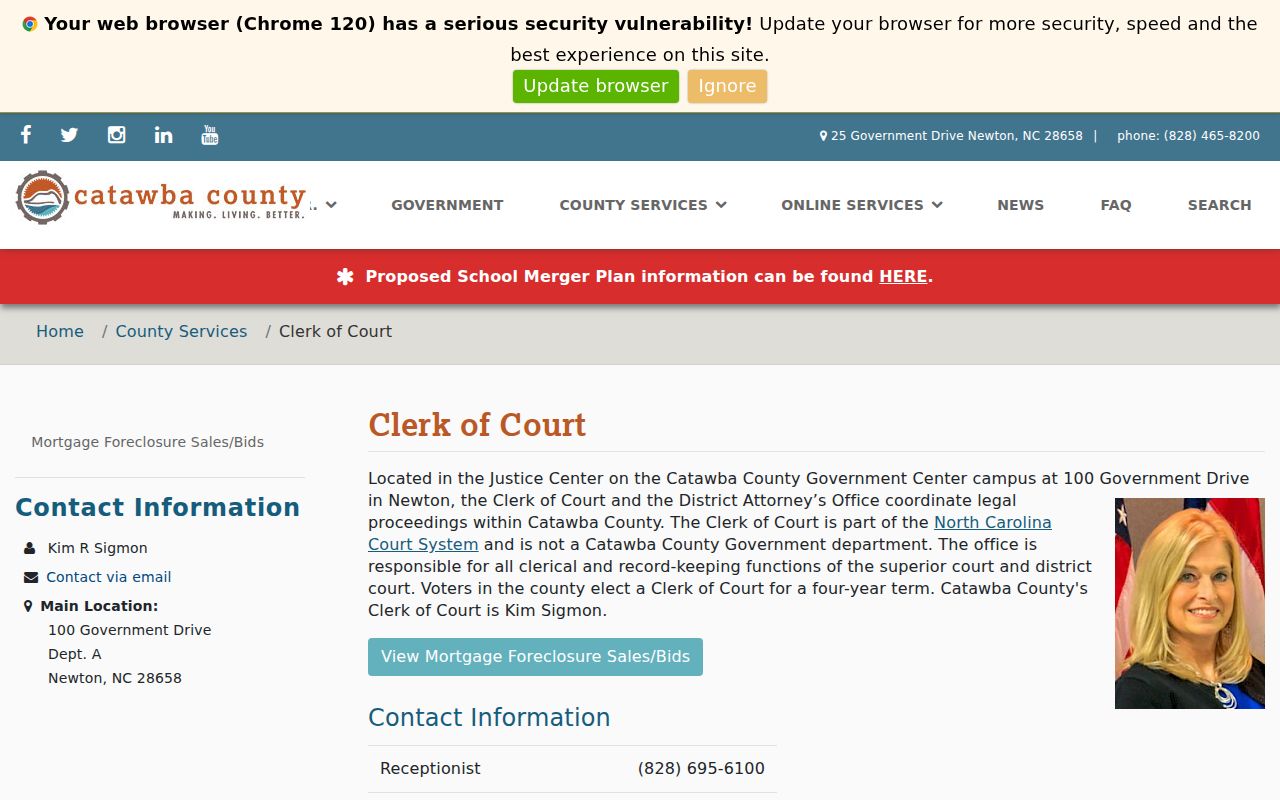
Those direct department lines help keep a court-file request from being routed to Sheriff Records, which holds different records.
Searching Catawba County Case Records
North Carolina eCourts Portal provides anonymous public searching through Smart Search, while the Judicial Branch's eCourts program page explains the statewide system. Registration is optional and is mainly useful for saving cases. Portal is a locator and near-real-time public case view, not a certified criminal background check. Follow the court file when an online label or result will affect an important personal decision.
- Open Smart Search and enter an exact case number when available, or use the person's full name.
- Expand Advanced Filtering Options, choose Catawba County, and select Criminal Actions.
- Narrow similar results by filed date, status, and case type, then compare the charge before choosing a match.
- Open Case Summary and Register of Actions. Check hearings, filings, charge status, and the final disposition.
- Use a free courthouse terminal or contact the Clerk's Criminal Department for the official file, copies, or certification.
The Portal controls below are the fields documented in Catawba County research.
| Field or Control | Type | Required | Use |
|---|---|---|---|
| Search criteria | Text | Yes | Name, case number, or attorney/bar number |
| Advanced Filtering | Expandable filters | No | Select Criminal Actions |
| Location/county | Filter | No | Choose Catawba |
| Date filed | Date range | No | Narrow common names |
| Status/type | Filters | No | Availability varies by search |
| Search | Button | Yes | Runs the query |
Catawba Portal Case Limits
Portal and a certified search answer different questions. The online case view is well suited to finding a known Catawba County criminal docket, checking a setting, or reading the Register of Actions. It is not the Judicial Branch's official background-check product. A certified, name-based search from the clerk costs $25, uses form AOC-CR-314, and covers Catawba County only. Free courthouse terminals provide noncertified statewide searches by defendant name, case number, or victim and witness name.
Portal also does not show every document. Sealed, expunged, juvenile, confidential, and role-restricted information stays out of ordinary public access. Older paper material may not be imaged. The Judicial Branch describes broader licensed data access through its Remote Public Access program, but that service does not replace the clerk's official file. If a public search has no result, check the spelling and county filter, then call the clerk instead of treating the blank screen as proof that no Catawba County court case exists.
Note: Portal can accept eligible court costs and fees, but its ordinary payment function does not take cash bonds or bond forfeitures.
Inside a Catawba County Case File
The clerk's file records what prosecutors filed and what the court did next. It can resolve a key gap between an allegation at booking and the final charge-level result. Read each charge on its own. One count may be dismissed while another ends in a plea or verdict. Hearing dates can change, so use the current court calendar before relying on a date shown in an older docket event.
| Case number and court | Identifies the Catawba docket, location, and District or Superior Court track. |
|---|---|
| Charging document | Shows the complaint, citation, information, or returned indictment that formally states a charge. |
| Register of Actions | Lists filings, service, settings, pleas, dismissals, judgments, and financial entries in date order. |
| Hearings | Provides public date, time, and location data, subject to calendar changes. |
| Disposition | States the outcome of each filed charge, such as conviction, dismissal, or acquittal. |
| Judgment and sentence | Records the court's terms, including custody, probation, restitution, or other lawful conditions. |
Catawba Criminal Docket Terms
The Register of Actions is a dated event list, not a short verdict line. A filing may record a setting, service, plea, dismissal, financial assessment, or judgment. “Disposition” means the result for a charge. “Nolle prosequi” reflects the prosecutor's choice not to proceed, often displayed as voluntarily dismissed. An “indictment” is a felony accusation returned as a true bill by a grand jury. It is not itself a conviction.
- Arraignment
- The stage when a formal charge is addressed and a plea may be entered.
- Plea
- The defendant's formal response to a filed charge.
- Acquittal
- A not-guilty decision after the matter is heard.
- Dismissal
- The end of a charge without a conviction on that count.
- Judgment
- The court's formal ruling, including the result and sentence when guilt is found.
Use the final charge-level event and judgment, not the first allegation. For the broader path from booking into the file, compare the contextual Catawba County arrest lookup with the court docket.
How a Criminal Case Moves
A misdemeanor generally remains in District Court. A felony normally begins there for its early stages, then may move through a probable-cause or waiver path and grand-jury review before trial in Superior Court. Prosecutors may amend, dismiss, or replace an arrest charge. That is why a court search must follow the case through its last public event instead of stopping at its first label.
Catawba case flow: Charges Filed › Arraignment › Pretrial › Plea or Trial › Disposition › Sentencing
The court's judgment controls the final public outcome. Appellate review may follow when invoked, and later motions or relief can add new entries. A booking charge is just the starting allegation. It does not fix the offense of conviction or prove that the case reached conviction at all.
Catawba Criminal Courts Campus
The Justice Center can host as many as eight types of court at once, including Superior Criminal, District Criminal, Infractions, Domestic Violence, Juvenile, and other civil or special sessions. That mix can make a broad Portal query noisy. Filtering to Catawba and Criminal Actions separates the criminal file from estate, civil, and special-proceeding results. Court deputies screen the building, and weapons are barred. Cellphone use is prohibited in courtrooms.
The North Carolina Judicial Branch location page provides Catawba court services, calendars, and forms.
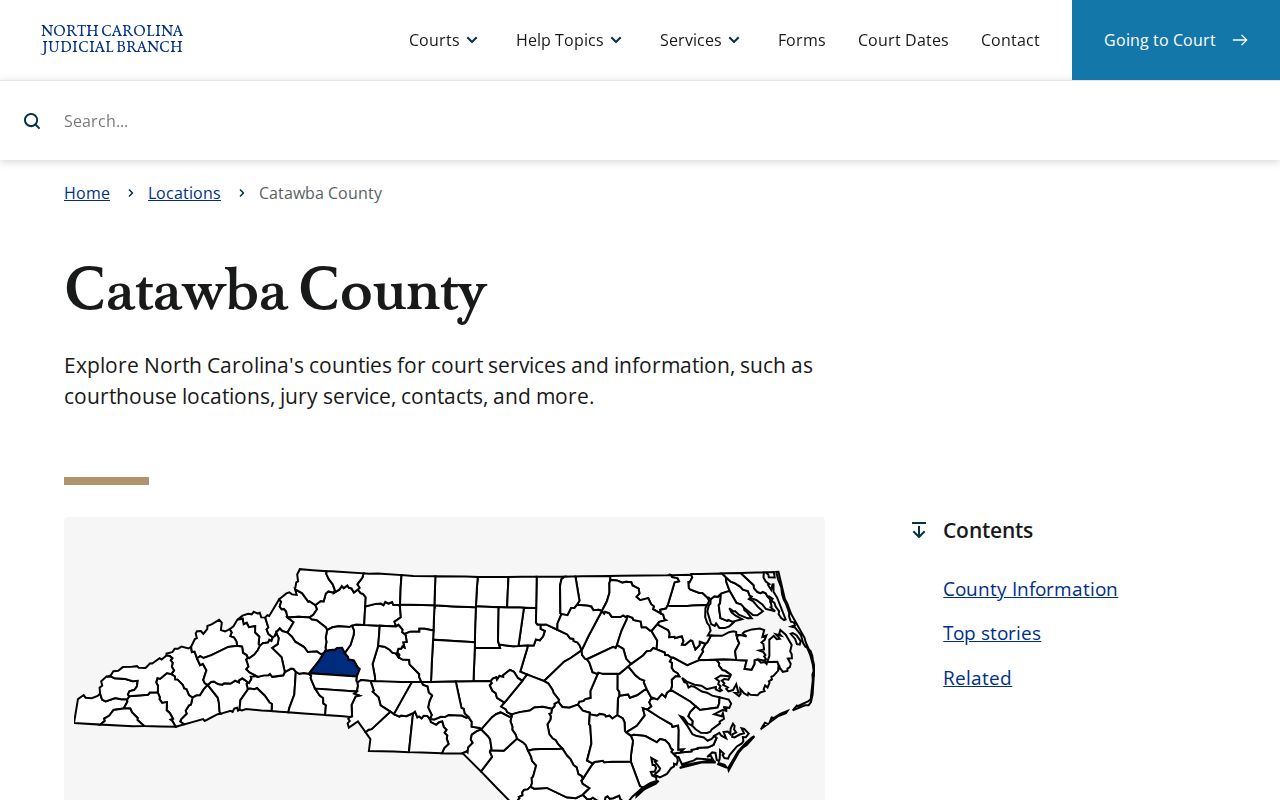
The statewide court page is the sound place to check a current calendar before traveling to Newton for a file or hearing.
Case Record Access & Restrictions
North Carolina G.S. 7A-109 directs clerks to keep court records open for inspection and copying unless a law or court order restricts access. The Judicial Branch's court-record access instructions route people to the clerk for case files. The rule supports public review, but it does not turn confidential material into a public file. Juvenile cases, expunged matters, sealed records, protected identifiers, and some victim information can be absent or redacted.
A court case file also differs from a police investigation file. G.S. 132-1.4 treats criminal investigation and intelligence records differently from the basic information that law enforcement must disclose. Ask the Clerk for pleadings, events, and judgments. Ask the agency that made the report for releasable police material. The statewide request-a-public-record routing page and NCAOC request form explain why sending a broad request to the technology office can fail when the local Clerk remains custodian of Catawba County case files.
The distinction also applies when a Catawba County criminal case is missing online. A sealed Catawba County matter cannot be restored to public view by a records request. An old Catawba County paper file may simply require staff help. Give the criminal case number, party name, and an approximate filing year so the Catawba County Clerk can identify the right reason for the gap.
Catawba Criminal Counsel Records
Catawba County research did not establish a staffed local Public Defender storefront. Local appointment rules use a private-attorney roster administered through the clerk and bar. If a docket lists appointed counsel unclearly, call the Clerk at 828-695-6100 and use the case number. The District Attorney's Catawba office is at the Justice Center and prosecutes criminal cases for the State, but it is not the custodian for copies of the court docket.
This routing distinction saves time. The Clerk identifies the public case file and can clarify assigned counsel shown in that file. The prosecutor manages the State's case. Sheriff Records keeps sheriff reports and booking material. A reader who sends one broad demand to all three offices may get partial answers because each office holds a different part of the Catawba County criminal record.
Note: Use the case number when asking about assigned counsel; similar names alone can point to the wrong Catawba criminal file.